
After School Programs for Character Development
Last Updated: November 17, 2026
Quick Summary
After school programs for character development build traits like integrity, perseverance, empathy, and responsibility through consistent routines, coaches who model respect, clear consequences and praise, and progressive challenges. Character is caught, not taught, so kids copy what they see adults do under pressure. Look for programs that can describe their routines and how they measure growth.
- Strong programs share consistent routines, modeling coaches, clear consequences and praise, and progressive challenges.
- Credible programs measure growth through observation rubrics, self-report surveys, parent and teacher input, and attendance data.
- Ask what a typical session looks like minute by minute and how the program knows a child is improving.
- One commitment kept for a season builds more character than three abandoned activities.
- Evaluate quality by staff credentials, safety protocols, parent communication, and age fit.
Table of Contents
- What Strong Character Development Looks Like in After-School Settings
- Character Education Programs for Kids: A Comparison of Top Options
- Social and Emotional Learning in After-School Programs
- Character-Building Activities for Children That Actually Work
- How Youth Mentorship Programs Shape Long-Term Outcomes
- How Parents Can Evaluate Program Quality and Age Fit
- Request More Info from TEAM DNA Boxing Club
- Frequently Asked Questions
What Strong Character Development Looks Like in After-School Settings
Character development is the deliberate cultivation of traits like integrity, perseverance, empathy, and responsibility through structured practice and consistent adult modeling.
That is why after school programs for character development matter so much. The hours between the final bell and dinner are when habits form.
The strongest programs share four traits:
- Consistent routines that teach self-management
- Coaches who model respect and integrity
- Clear consequences and clear praise
What most guides miss is that character is caught, not taught. Kids copy what they see adults do under pressure.
Character Education Programs for Kids: A Comparison of Top Options
Character education programs for kids fall into four broad categories: sport-based mentorship, faith-based and community youth services, municipal or nonprofit after-school programs, and enrichment clubs. The right fit depends on your child’s age, temperament, schedule, and access.
How to read this comparison
Focus is which character traits the program builds. Ages served tells you whether your child will be grouped with peers or in a mixed-age room. Cost model tells you whether to expect a published fee, a sliding scale, or request-for-pricing. Distinguishing feature is the one thing that program does that the others do not.
| Program | Focus | Ages served | Cost model | Distinguishing feature |
|---|---|---|---|---|
| TEAM DNA Boxing Club | Boxing, discipline, mentorship | 5 to 70 (youth and adult tracks) | Contact for pricing | USA Boxing affiliation, AIBA one-star certification, traveling team with national reach |
| Salvation Army Youth Services | Sports, community, faith-informed youth development | Varies by local corps; commonly school-age through teen | Free and low-cost | Broad local footprint and no-cost access |
| Children’s Trust After-School Programs | Dance, sports, enrichment for older students | Middle and high school | Contact for pricing | Programming designed specifically for adolescents |
| KidsPark | Art and science enrichment clubs | Varies by location; commonly elementary-age | Contact for pricing | Named clubs such as Picasso Art Club and Wacky Science Club |
| YMCA afterschool | Recreation, SEL, homework support | Varies by branch; commonly K-8 | Sliding scale and financial assistance at many branches | National network with consistent safety and staff-training standards |
| Boys & Girls Clubs | Youth development, mentorship, leadership | Varies by club; commonly ages 6-18 | Low-cost membership at many clubs | Drop-in format and teen leadership programming |
TEAM DNA Boxing Club
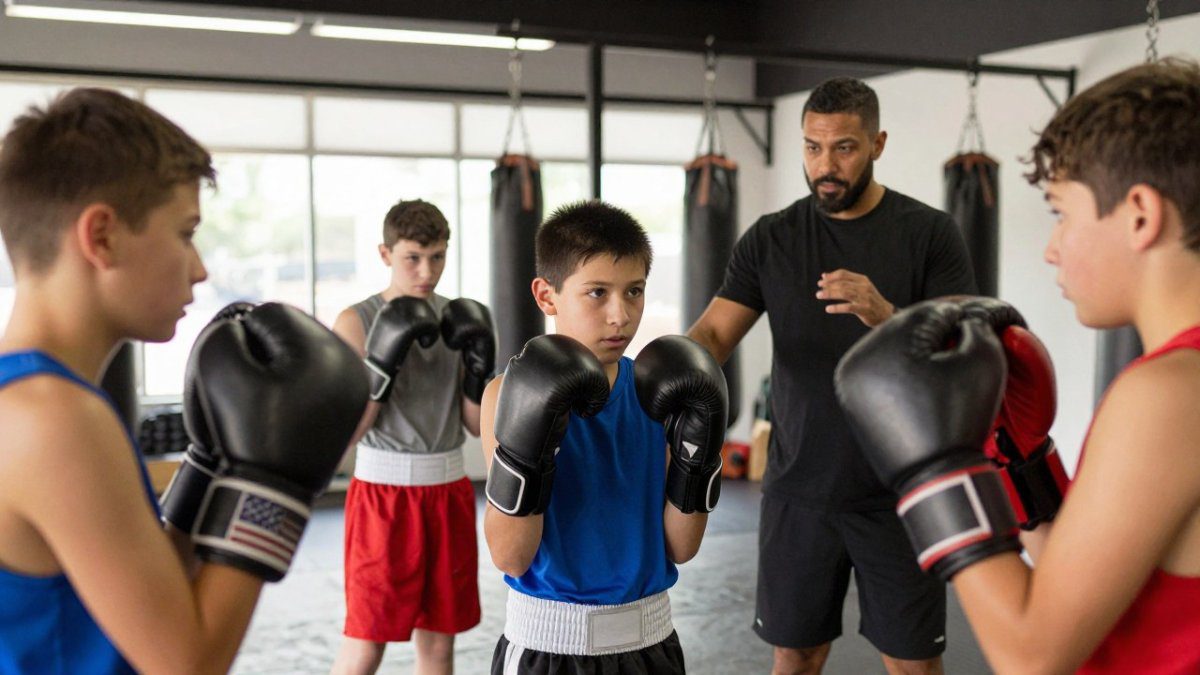
Boxing can be a discipline-first sport, with training built around respect, footwork, and repetition.
We are affiliated with USA Boxing, hold AIBA one-star certification, and run a traveling team with national reach. Programs serve ages 5 to 70. Best for: families who want mentorship and physical challenge in one package. Skip if: you need a free program.
The Salvation Army Youth Services
For families on a tight budget, this is often the most accessible option on the list. The Salvation Army’s youth services offer free and low-cost after-school activities built around sports and athletic skill development. Best for: families who need affordability first. Skip if: you want a specialized character curriculum, because local schedules and program details vary by location.
The Children’s Trust After-School Programs
This option targets older students specifically. The Children’s Trust after-school programs describe activities like dance and sports designed for middle and high school students. Best for: teens who need an outlet for self-expression. Skip if: you have an elementary-age child, since the programming is aimed at older grades.
KidsPark
Enrichment clubs round out the list. KidsPark describes its after-school enrichment offerings for families. Best for: kids who light up around art or science. Skip if: your child needs physical outlets, because the published activities are creative and academic rather than athletic.
YMCA afterschool programs
YMCA branches offer after-school programs, and families can ask each local branch about its program details, quality, and pricing. Best for: families who want a familiar, well-staffed setting with financial assistance options. Skip if: your child needs a single-sport specialization, because the format is broad rather than deep.
Boys & Girls Clubs
Boys & Girls Clubs are a drop-in model rather than a fixed-curriculum program, which makes them a good fit for kids who resist structured activities. Best for: families who need flexibility. Skip if: your child needs a consistent same-coach relationship, because staffing and attendance patterns vary by club.
What this comparison does not tell you
A table cannot capture whether your child will click with a specific coach, whether the schedule fits your commute, or whether the group size suits a kid who needs attention. Use the table to narrow the field to two or three options, then use the evaluation checklist later in this article.
Age fit at a glance
- Elementary school: look for small groups, high adult-to-child ratios, and play-based or skill-based activities with clear routines.
- Middle school: look for programs that give kids a real role, assistant coach, team captain, club officer, because responsibility is the trait this age needs most.
- High school: look for leadership tracks, travel or competition opportunities, and service components that build a record and a sense of purpose.
If you are weighing boxing specifically, our parent’s guide to boxing safety for children covers what to ask about contact and protective gear.
Social and Emotional Learning in After-School Programs
Social and emotional learning in after-school programs is the structured teaching of five skills: self-awareness, self-management, social awareness, relationship skills, and responsible decision-making. The Collaborative for Academic, Social, and Emotional Learning defines the framework that most programs now follow, and a federal literature review of afterschool programs for children ages 6 to 12 examined how these settings report positive social-emotional outcomes.
The harder question most guides skip: how do you know a program is actually building these skills rather than just saying so?
What SEL looks like in practice
In practice, SEL looks less like a lesson and more like a moment. A kid loses a sparring round, gets frustrated, and a coach walks them through breathing and resetting, self-regulation training in real time.
Strong programs tend to use a short, repeatable routine: a check-in at the start of the session, a coached moment during the activity, and a brief reflection at the end.
How programs actually measure character growth
Character growth is real but hard to see week to week, so credible programs use more than one method:
- Direct observation with a rubric. Coaches rate specific, observable behaviors, waits turn, accepts correction, encourages a teammate, rather than vague traits like “good attitude.”
- Self-report surveys. Youth answer short, age-appropriate questions about their own regulation and relationships, usually at the start and end of a season.
- Parent and teacher input. Brief check-ins capture whether changes at the program show up at home and at school.
How to tell evidence-informed practice from marketing
Many programs describe themselves as SEL-aligned. Fewer can explain what that means in their daily schedule. Ask three questions:
- What does a typical session look like, minute by minute? A credible answer names routines, not slogans.
- How do you know a child is improving? A credible answer names a method and a frequency.
- What happens when a child struggles behaviorally? A credible answer describes a coaching response, not a punishment-only policy.
Watch out: a program that claims to “build character” but cannot describe a single routine or measurement method is offering branding, not programming. That does not make it a bad place for your child, it just means you should judge it on other factors.
What the research supports, and what it does not
The evidence base for SEL in after-school settings is promising but uneven. Studies have examined positive associations between well-implemented SEL programming and social-emotional skills, behavior, and attitudes. The limitations matter too: programs vary widely in fidelity, many studies rely on self-report, and effects are often strongest when staff are trained and supported.
If discipline is the specific trait you want to build, our guide on how to build discipline in youth breaks down the methods we use.
Character-Building Activities for Children That Actually Work
The character-building activities for children that actually work share one feature: they require effort and feedback. A worksheet on honesty changes little.
Here is how we would build a week:
- Monday: footwork drills, which teach patience and repetition
- Wednesday: partner work, which teaches communication and trust
- Friday: conditioning, which teaches perseverance
Old Dominion University researchers studied a resiliency-based after-school recreation intervention and explored its perceived effects on youth resilience.
Watch out: signing a child up for three activities at once teaches them to quit when things get hard. One commitment, kept for a season, builds more character than three abandoned ones.
How Youth Mentorship Programs Shape Long-Term Outcomes
Youth mentorship programs can give kids a consistent adult who holds high expectations and keeps showing up for them.
A child who has been in trouble may respond better to an adult who shows up every week, remembers their name, and expects them to improve than to another lecture.
For parents comparing options, our guide on finding youth mentorship programs covers how to judge fit before you enroll.
How Parents Can Evaluate Program Quality and Age Fit
Parents can evaluate program quality by checking four things: staff credentials, safety protocols, parent communication, and whether the activities match the child’s age. A parent guide from Premier Kids Academy recommends exactly these criteria, and they hold up.
Ask these questions before you enroll:
- Are coaches certified, and by whom?
- What are the safety protocols for contact activities?
- How and how often do staff communicate with parents?
Age fit deserves special attention. A five-year-old and a fifteen-year-old need different coaching, pacing, and expectations. Programs that serve everyone should be able to explain how they separate age groups.
Request More Info from TEAM DNA Boxing Club
Structure and a committed adult can make a meaningful difference for young people. TEAM DNA Boxing Club is built to provide that environment: certified coaching, USA Boxing affiliation, and a mentorship culture that treats discipline as a life skill.
Our programs serve ages 5 to 70, from first-timers to our traveling team with national reach. If you are ready to compare local options, see which youth boxing programs fit your kid, or read more about the benefits of after-school boxing for kids and teens.
Your child does not need to be athletic to start. They need a coach who meets them at zero and builds from there.
Frequently Asked Questions
What are some effective character building programs for kids?
Effective programs combine structured activities with clear values. Options include TEAM DNA Boxing Club (boxing and mentorship), The Salvation Army Youth Services, The Children’s Trust After-School Programs, and KidsPark. Look for programs that explicitly teach traits like respect, integrity, and perseverance through hands-on learning.
What should parents look for in an after-school character development program?
Check for certified coaches or teachers, clear safety protocols, a curriculum that names specific character traits, and regular communication with families. Ask how the program measures progress and whether it offers age-appropriate activities. Programs affiliated with recognized bodies may add credibility.
How do after-school programs help children build social and emotional skills?
Programs create safe environments where kids practice cooperation, conflict resolution, and self-regulation through group activities. Research from CASEL and the Afterschool Alliance discusses social and emotional learning in after-school programs and the skills it aims to build, including empathy, responsible decision-making, and peer relationships. Consistent adult mentorship reinforces these skills week after week.
What activities teach kids discipline and resilience?
Boxing, martial arts, team sports, and experiential learning activities teach discipline through repetition and goal-setting. Resilience grows when children face manageable challenges with supportive coaches. TEAM DNA Boxing Club uses boxing training to build self-control and perseverance, while programs like The Salvation Army use sports to teach athletic and life skills.
How can families tell whether a program is helping a child develop character?
Look for observable changes: better attitude at home, improved grades, stronger peer relationships, and greater willingness to take responsibility. Ask the program for feedback on your child’s progress. Programs that track outcomes and communicate with parents can make it easier to see growth in character development.
