
Youth Mentorship Programs in Cleveland: How to Find the Right Fit
Last Updated: November 10, 2026
Quick Summary
Youth mentorship programs in Cleveland pair young people with trained adults for one-to-one, team, or school-based mentoring, and most listed programs state no fee to families. Confirm costs, transportation, and waitlists directly, since mentor supply limits enrollment and openings vary by program.
- In fiscal year 2024, the Office of Juvenile Justice and Delinquency Prevention awarded more than $89.2 million to expand youth mentoring nationwide.
- True2U recruits adult volunteers for eighth-grade students, with a November 19 deadline for the 2026-2027 school year.
- Community of Hope recruits six to eight adult mentors around a single young adult in a team model.
- Ask programs about background checks, reference verification, mentor training, and how matches are supervised.
- TEAM DNA Boxing Club serves ages 5 to 70 and offers trial sessions for beginners.
Table of Contents
- What Cleveland Youth Mentorship Programs Actually Offer
- Free Mentorship Programs for Youth in Cleveland
- How to Find a Mentor for a Teenager
- What to Look for in Youth Mentors
- Questions to Ask a Youth Mentoring Program
- Matching the Program to the Young Person
- Request a Visit to TEAM DNA Boxing Club
- Frequently Asked Questions
What Cleveland Youth Mentorship Programs Actually Offer
Youth mentorship programs pair a young person with a trained adult who provides steady guidance, academic support, and a reliable presence over time. In Cleveland, the strongest programs go further: they build leadership skills, connect families to community resources, and give teenagers a place where someone notices when they show up.
The scale of that work is real. In fiscal year 2024, the Office of Juvenile Justice and Delinquency Prevention awarded more than $89.2 million to expand youth mentoring opportunities and improve mentoring quality nationwide. That funding reflects a simple finding repeated across decades of research: consistent adult relationships change outcomes.
Consistent adult relationships are what drive that change in youth programs. A coach who shows up, sets a standard, and refuses to give up on a young person is the kind of relationship that makes the difference.
What should families expect from a good program? Four things:
- A trained adult mentor, screened and prepared before matching
- A consistent schedule, so the relationship has room to grow
- Skill-building, whether academic, athletic, or leadership-focused
- A pathway to other support, from tutoring to family services
The programs below differ in age range, format, and focus. The right fit depends on the young person, not on which program sounds most impressive.
Free Mentorship Programs for Youth in Cleveland
Many youth mentoring programs in Cleveland are funded by nonprofits, county agencies, and school partnerships, so parents should ask about fees directly rather than assume a program is out of reach.
Free mentorship programs for youth in Cleveland generally fall into three models: one-to-one mentoring, team mentoring, and school-based mentoring. Each serves a different kind of young person, and each comes with its own logistics.
| Program | Age or Grade | Format | Cost to Families | Practical Support | Application Route |
|---|---|---|---|---|---|
| Resource Cleveland Youth Mentoring | Grades 4-8 | One-to-one mentoring | No fee stated; confirm directly | Siblings can enroll together; ask about transportation | Referral or direct application; call for current openings |
| True2U (Neighborhood Leadership Institute) | Eighth-grade students | School-based class mentoring | Free to students | Delivered during school day, removing transportation barrier | School-based enrollment; volunteer mentors apply separately |
| 100 Black Men of Greater Cleveland | Youth, multiple initiatives | Group and one-to-one | Varies by initiative; ask | Depends on program; some include meals and activities | Contact organization for current program applications |
| Community of Hope | Ages 18-27 | Team mentoring | No fee stated; confirm | Team model may include practical supports; ask | Direct application or referral; verify waitlist |
| UnitedIcons Programs | Youth | Hands-on mentoring | Confirm directly | Tied to school and family support | Contact program for enrollment steps |
| TEAM DNA Boxing Club | Ages 5-70 | Gym-based coaching and mentorship | Ask about trial and membership costs | Gym equipment provided; team travel may involve costs | Book a trial session; see booking page |
A few details matter here. True2U recruits adult volunteers to work with eighth-grade students, and its volunteer enrollment for the 2026-2027 school year listed November 19 as the application deadline, per Resource Cleveland’s recruitment notice.
Costs and financial accessibility. No program in this list advertises a fee to families, but that does not mean zero cost. Activity fees, uniforms, competition travel, and field trips can add up.
Transportation and meals. School-based programs generally meet during the school day, which can reduce transportation needs. Community-based programs may not.
Application steps and current availability. Most programs require an application, a parent or guardian signature, and sometimes a referral from a school or social service agency.
Eligibility rules vary by program, and a program that fits one sibling may not fit another. Confirm the age or grade range, the application window, and any associated costs before you apply.
How to Find a Mentor for a Teenager
Finding a mentor for a teenager starts with three questions: what does the teen need, who does the teen trust, and what format will that teen actually attend? Answer those honestly and the shortlist gets short fast.
Teenagers are harder to match than younger children. They are more skeptical, more sensitive to being “fixed,” and quicker to spot an adult going through the motions. A program that works beautifully for a nine-year-old can fall flat with a fifteen-year-old.
Here is how we would approach it:
- Name the actual gap. Is it grades, attitude, isolation, or idle after-school hours? A mentoring relationship aimed at nothing in particular tends to drift.
- Ask the teen what they would tolerate. A teenager who hates sitting still will not thrive in a classroom-based program, no matter how good it is.
- Check the format. One-to-one mentoring offers depth. Team mentoring offers breadth. School-based programs remove transportation barriers.
- Call and ask about matching. Good programs match on personality and interests, not just availability.
- Visit before committing. Watch how staff talk to young people when they think no one is listening.
The American Institutes for Research’s youth mentoring work has spent more than a decade studying what makes these relationships hold, and the consistent theme is fit: the match matters more than the curriculum.
What to Look for in Youth Mentors
The best youth mentors are consistent, trained, and genuinely interested in the young person in front of them. Credentials help. Reliability matters more.
What separates a mentor who changes a life from one who fills a slot? In practice, four qualities show up again and again.
They keep showing up. A mentor who cancels twice in the first month teaches the teenager that adults are unreliable. That lesson sticks.
They hold a standard without shaming. Discipline and warmth are not opposites. The mentors who reach struggling kids are usually the ones who are firm about expectations and generous about second chances.
They are trained, not just willing. Mentor training covers boundaries, trauma-informed communication, and what to do when a teenager discloses something serious. A volunteer who has never had that preparation is a risk, not an asset.
They stay in their lane. A mentor is not a therapist, a parent, or a probation officer. Good programs are clear about that.
Our advice for families: ask what training mentors receive and how the program handles a match that is not working. For a deeper look at what separates effective mentors from well-meaning ones, see what to look for in youth mentors.
Questions to Ask a Youth Mentoring Program
Ask about time commitment, screening, training, and what happens when things go wrong. Programs that answer these questions clearly are usually the ones worth trusting.
Screening and safety. This is the first thing to ask about, not the last.
- What does the background check cover? Look for a criminal background check, a sex offender registry check, and reference checks. Ask whether checks are repeated periodically.
- How are references verified? At least two personal or professional references should be contacted, not just collected.
- What does the interview process involve? A structured interview, not just a form, helps screen for fit and motivation.
- What training do mentors complete before matching? Look for at least a few hours of preparation covering boundaries, trauma-informed communication, mandated reporting, and what to do when a young person discloses something serious.
- How are matches supervised? Ask how often staff check in with the mentor, the young person, and the family. Monthly contact is a common minimum.
- What is the policy on one-on-one contact? Clear rules about communication, transportation, and meeting locations protect everyone.
Time commitment and structure. Most programs ask for a set number of hours per month, often four to eight. Honesty about that number prevents early drop-off.
Measuring progress and outcomes. Vague answers are a warning sign. Ask how the program tracks attendance, grades, and family feedback, and whether it shares outcome data.
What happens when a match does not work out. A rematch process is a sign of a mature program.
Costs and logistics. Ask directly: Is there any cost to families? Are there activity fees, uniforms, or travel costs? Is transportation provided? Are meals or snacks served?
Who to contact when something goes wrong. You want a named staff member with a direct phone number, not a general inbox.
One insider observation: programs that are cagey about screening and training are usually cagey for a reason. Ask for specifics and notice how the answer is delivered.
Matching the Program to the Young Person
The right program depends on the young person’s age, temperament, and needs. A structured gym environment suits some teenagers; a classroom-based program suits others. Neither is better in the abstract.
Consider the fit by profile:
- A middle schooler who needs a steady adult: a one-to-one mentoring program for grades 4-8.
- An eighth grader building confidence: a school-based mentoring program delivered through the school day.
- An at-risk student who needs direction: a mentoring program that pairs guidance with leadership development.
- A young adult who needs a wider support network: a team-based mentoring model for young adults.
- A teenager who needs to move, sweat, and belong: a gym-based program with clear standards.
That last one is where we live. Boxing is not for every kid, but for the teenager who has been told he is a problem, a gym that demands discipline and rewards effort can rewrite that story fast.
Families comparing youth boxing options specifically can use which youth boxing programs in Cleveland fit your kid to weigh the local choices side by side.
Request a Visit to TEAM DNA Boxing Club
TEAM DNA Boxing Club is a community-focused, USA Boxing-affiliated gym with AIBA one-star certification and more than 25 years of experience training youth and adults. Our programs serve ages 5 to 70, and we have a traveling team with national reach.
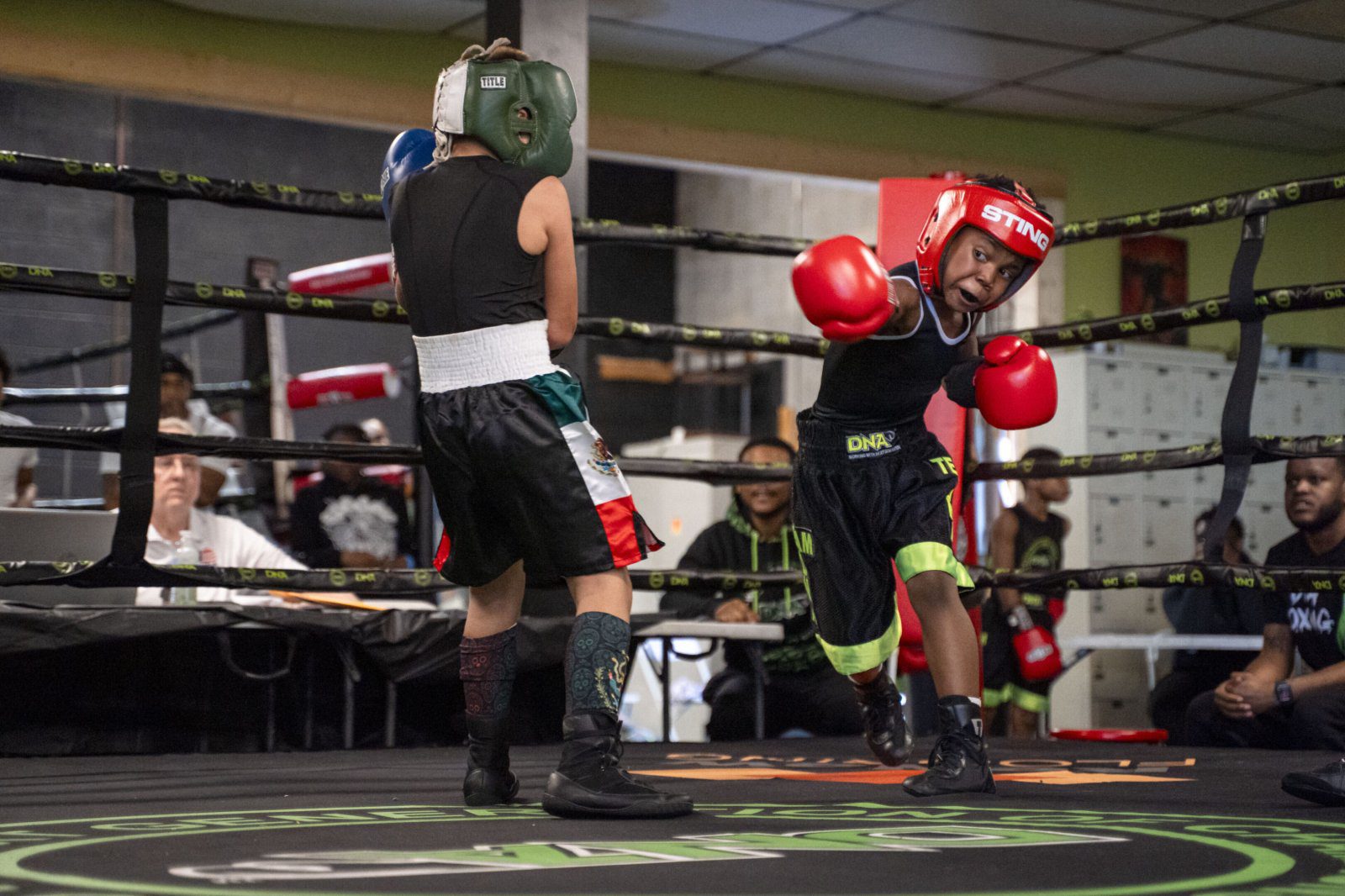
If you are ready to see it, start with how to book a boxing trial session for beginners and check our upcoming events before you come in.
The hardest part is not finding a program. It is finding one your teenager will actually attend long enough for the relationship to take hold. TEAM DNA Boxing Club offers certified coaching, a USA Boxing affiliation, and a team culture that gives young people discipline, self-defense skills, and adults who expect them to show up. Get started with TEAM DNA Boxing Club and give your kid a place where effort is noticed.
Frequently Asked Questions
Are there free youth mentorship programs in Cleveland?
Costs vary by program, so ask each organization directly whether there is a fee, what it covers, and whether equipment, transportation, or uniforms cost extra.
How much does a youth mentorship program cost?
Costs vary widely by program model. Some Cleveland mentoring programs are funded through grants and donations and charge families nothing, while others may charge for activities, travel, or gear. Always ask a program to confirm any family cost in writing before enrolling, and ask whether scholarships or sliding-scale options exist.
What should parents look for in a youth mentor?
Look for consistent availability, real training, and a background check process. A mentor should be able to commit the stated hours per month for at least a school year, since youth mentoring depends on reliability. Ask how mentors are screened, what training they complete before matching, and whether the program supervises the mentor-mentee relationship afterward. For teens who respond to action rather than conversation, a mentor who coaches a skill, like boxing, can build trust through shared practice rather than forced discussion.
How can a mentor help an at-risk youth?
Beyond earnings, mentors provide accountability, a steady adult presence, and connections to community resources. Programs serving at-risk youth, including those with foster care experience or juvenile justice involvement, pair that consistency with practical support around school, family, and future planning.
