
How to Find Reputable Youth Boxing Coaches
Last Updated: November 8, 2026
Quick Summary
To find reputable youth boxing coaches, start with local gyms and coach directories, then verify credentials before you commit. Ask about USA Boxing certification, background screening, first-aid and CPR certification, and written safety and sparring policies. Reputable youth boxing coaches answer these questions gladly and let parents watch classes.
- Search “youth boxing” plus your neighborhood or school district, then check gym websites for kids’ class times.
- USA Boxing coaches must pass their certification exam with a perfect score to become certified.
- Verify credentials independently using the certification body’s online member lookup before paying a registration fee.
- Ask at what age sparring starts and whether it is required before any contact happens.
- Walk away from coaches who push full contact before a child has learned basic defense.
Table of Contents
- Start With Local Gyms and Coach Directories
- Check Youth Boxing Coach Credentials Before You Commit
- Questions to Ask a Youth Boxing Coach
- How to Spot a Bad Boxing Coach
- What a Personal Boxing Trainer Cost Really Covers
- Your First Visit and Trial Class Checklist
- Request More Info From TEAM DNA Boxing Club
- Frequently Asked Questions
Start With Local Gyms and Coach Directories
Finding reputable youth boxing coaches starts with a short list of local gyms, then narrows fast once you know what to check. The better path is a simple two-step search, then a hard look at who is actually teaching your child.
Search by Location and Availability
Start close to home, then widen only if the local options fall short. A coach twenty minutes away is worth it.
- Search “youth boxing” plus your neighborhood or school district
- Check gym websites for kids’ class times, not just adult hours
- Call and ask which nights have open spots for your child’s age
Availability matters more than most parents expect. A program that meets twice a week and keeps the same schedule builds routine.
Cleveland-area families can see which local youth programs fit their kid by reading which youth boxing programs in Cleveland fit your kid.
Read Reviews and Ask for Recommendations
Reviews give you patterns, not proof. Read ten, not one. Look for repeated comments about how coaches treat beginners and how they handle a kid who struggles.
Ask other parents directly. School parents, neighbors, and youth group leaders will tell you things no review page will. A common mistake is trusting a five-star rating from people who never had a shy or nervous kid in the class.
Check Youth Boxing Coach Credentials Before You Commit
Credentials are the fastest filter you have. Ask for them before the first class, not after. A reputable coach expects the question and answers it without hesitation. The difference between a strong program and a weak one usually comes down to whether the coach can show you paperwork, not whether they talk a good game.
USA Boxing Certification and Coach Education
According to USA Boxing’s coach membership and certification information, coaches must pass their certification exam with a perfect score to become certified.
Ask three things:
- Which certification level does the coach hold?
- When was it last renewed?
- Does the gym belong to USA Boxing as a club?
Ask whether the coach is certified and whether the gym is a registered club, since both matter for insurance and for competing in sanctioned events later.
For a deeper breakdown of which certifications a reputable coach should hold, read the certifications every boxing coach needs.
How to Verify Credentials Independently
Do not take a certificate on the wall as final proof. Verify it yourself, and do it before you pay a registration fee.
- Ask for the coach’s full legal name and the certification body. Write both down.
- Use the certification body’s online member lookup, if one is available.
- Ask the gym for its club registration number and confirm it matches the listing.
- Ask whether a background check was run, who ran it, and when. A reputable program will name the screening provider and the date.
- Ask about first-aid and CPR certification, and confirm the expiration date. Ask to see current first-aid and CPR certification.
- Ask whether the coach has completed a safe-sport or abuse-prevention training, and which organization issued it.
- Call the certifying body if the listing does not match what you were told.
If a coach dodges these questions, that is your answer. Reputable youth boxing coaches hand over this information gladly.
Watch out: a laminated certificate with no member number and no expiration date is decoration, not verification. Ask for the number and check it yourself.
Safeguarding and Background Screening
Credentials cover coaching knowledge. Safeguarding covers whether your child is safe in the room. Ask separately about both.
- Screening: Who runs the background check, how often is it renewed, and does it cover all adults in the gym, including volunteers and assistant coaches?
- Supervision: Is there a written policy on one-adult-one-child situations, and are doors or viewing windows left open?
- Ratios: How many coaches supervise how many kids, and does that ratio hold during busy classes?
A program that cannot answer these questions in plain language is not ready for young children, no matter how good the coach’s competition record is.
Questions to Ask a Youth Boxing Coach
The right questions separate a real youth program from an adult gym that tolerates kids. Ask them in person and watch how the coach answers. A good coach talks about safety and teaching. A weak one talks about toughness.
Safety, Contact, and Sparring Policies
Ask directly: at what age does sparring start, and is it required? A sound program keeps young beginners on technique, footwork, and conditioning before any contact.
Watch out: a gym that brags about hard sparring for young kids is a red flag, not a badge. Growing bodies and growing brains do not need it.
For guidance on spotting mentors who genuinely help kids, read what to look for in youth mentors. Parents who want reassurance first can start with whether boxing is safe for children.
Class Size and Coach-to-Student Attention
Ask how many kids are in a class and how many coaches work the floor. A packed room with one coach means your child gets corrected rarely. Smaller groups mean real attention on stance, punching technique, and footwork.
Also ask how the coach handles a total beginner. Kids who start from zero should hear that everyone starts somewhere. That single sentence keeps a nervous child coming back.
How to Spot a Bad Boxing Coach
Bad coaching shows up early if you know what to look for. These are the patterns we would walk away from:
- Pushes full contact before a child has learned basic defense
- Cannot name a certification body or renewal date
- Uses humiliation or yelling as the main teaching tool
None of these need a second visit. One is enough.
Bad coaching shows up early if you know what to look for, and these are the patterns to walk away from.
| Red flag | What it looks like |
|---|---|
| Contact too soon | Pushes full contact before basic defense is learned |
| No credentials | Cannot name a certification body or renewal date |
| Harsh teaching | Uses humiliation or yelling as the main teaching tool |
| No safety policy | Has no written safety policy or parent communication |
| Closed doors | Won’t let parents watch a class |
| Mixed ages | Mixes young kids into adult training with no separation |
| Sales promises | Promises trophies or quick results to close the sale |
What a Personal Boxing Trainer Cost Really Covers
Personal boxing trainer cost varies by format: private sessions, small group classes, and team training all price differently. We do not publish rates here because they depend on session length, group size, and program type. Check TEAM DNA Boxing Club’s website or contact the club for current pricing. What we can do is show you how to read a quote so you compare programs on the same terms.
The Three Common Fee Structures
Most youth boxing programs price in one of three ways:
- Monthly membership: a flat fee that covers scheduled group classes, usually billed month to month or on a short contract. This is the most common format for beginners.
- Per-session or class pack: you buy a set number of sessions, often with a discount for a larger pack. Good for families testing a schedule before committing.
- Private coaching: an hourly or per-session rate for one-on-one instruction, typically the highest cost per hour and usually reserved for competitors or kids who need focused technical work.
Ask which structure the gym uses and whether the rate changes for a second child. Sibling discounts are common but rarely advertised.
What the Fee Should Cover
Before you compare numbers, confirm what is included. A lower headline rate that excludes equipment is often more expensive than a higher rate that includes it.
- Coached instruction time, with the coach-to-student ratio stated in writing
- Use of gloves, wraps, and protective equipment, or a clear list of what you must buy
- Supervised training and facility access
Ask specifically about hand wraps and mouthguards. These are personal items in most gyms, and a child who trains regularly will go through wraps quickly. Budget for them separately rather than assuming they are included.
Contracts, Cancellation, and Missed Sessions
Get the terms in writing before you sign. The questions that matter:
- Is the agreement month to month, or does it lock you into a set term?
- What is the notice period to cancel, and is there a cancellation fee?
- What happens if your child misses a session, is there a make-up class, a credit, or nothing?
Watch out: a contract that auto-renews with a long notice window is the most common source of parent complaints. Ask for the renewal terms in writing and mark the notice date on your calendar.
Comparing Programs on Total Value
Two gyms quoting different monthly rates can end up costing the same once you add equipment, registration, and competition fees. Build a simple comparison: monthly fee times twelve, plus registration, plus equipment, plus expected competition costs. Then divide by the number of coached hours your child actually gets.
Ask each gym for a written breakdown before you commit. A program that will not put its fees and cancellation terms in writing is telling you something about how it handles everything else.
Your First Visit and Trial Class Checklist
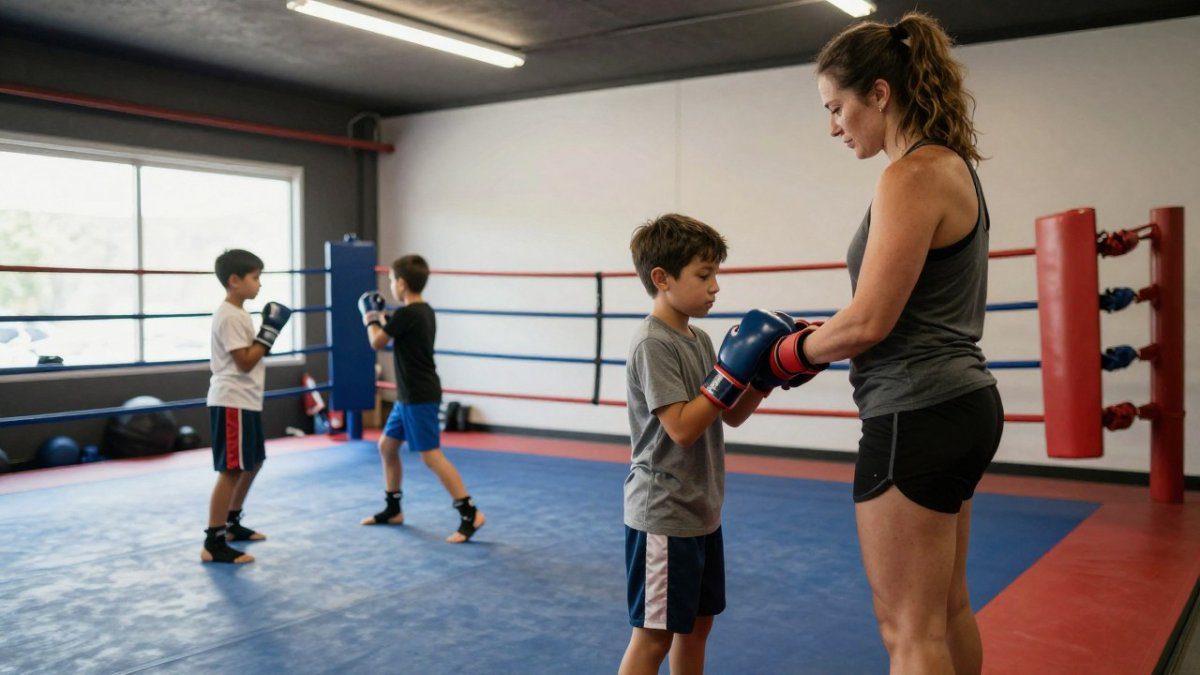
A trial class tells you more than any brochure. Arrive early, watch the whole session, and use this checklist:
- Coach greets your child by name
- Warm-up and conditioning are structured
- Beginners get hands-on correction on stance and footwork
Ready to meet a coach? Learn how to book a boxing trial session for beginners before you go.
Request More Info From TEAM DNA Boxing Club
Choosing a youth boxing coach comes down to three checks: verified credentials, a clear safety policy, and a coach who connects with your child. Skip any one of those and the program is a gamble.
At TEAM DNA Boxing Club, we are affiliated with USA Boxing and hold AIBA one-star certification, with over 25 years of experience.
Get started with TEAM DNA Boxing Club and give your child a coach who takes both safety and growth seriously.
Frequently Asked Questions
What qualifications should a youth boxing coach have?
Look for a coach with a current USA Boxing certification. Certification comes in levels, so ask which level the coach holds and whether it covers youth instruction. Beyond certification, check for CPR and first aid training, a background check, and experience coaching beginners rather than only competing. A coach who can explain stance, footwork, and punching technique in simple terms is a better fit for kids than one who only talks about competition.
How can parents tell if a boxing coach is reputable?
Reputable youth boxing coaches are transparent about their credentials, safety policies, and what a typical week looks like. They welcome parents watching a class, explain their sparring rules before you ask, and put age-appropriate instruction ahead of winning. Ask for references from other parents and read coach reviews on the gym’s site and local community pages. A coach who hesitates to share certification details or discourages parents from observing is a warning sign worth taking seriously.
How much does a personal boxing trainer cost?
Personal boxing trainer cost varies by session length, whether training is one-on-one or in a small group, and the coach’s experience, so there is no single rate. Ask what the fee includes: gloves and wraps, open gym time, competition coaching, or travel with a team. Get the total in writing before you enroll, including any registration or equipment fees. For youth programs, compare the monthly cost against the number of coached sessions your child actually attends.
What are the warning signs of a bad boxing coach?
Watch for coaches who push kids into sparring before they have mastered basic technique, skip protective equipment, or treat aggression as a goal. Other red flags include refusing to let parents observe, vague answers about certification, and no written safety policy. A coach who yells at or shames beginners, or who cannot describe how they handle injuries, is not the right fit for a child. Trust your instincts after a trial class, and ask other parents about their experience.
