
How Do You Build Discipline in Youth?
Last Updated: November 7, 2026
Quick Summary
To build discipline in youth, start with three to five clear rules stated in plain words, then teach good behavior through praise, calm correction, and consistent follow-through instead of yelling or shaming. Match limits to the child’s developmental stage and hand over control in small steps as they show readiness.
- Keep the family rule list short: three to five rules cover most of what matters at home.
- The AAP states aversive discipline like yelling and shaming is minimally effective short term and has no long-term benefit.
- Run a ten-minute weekly cycle with teens: set the goal, choose the strategy, then review without lecturing.
- Start habits with one achievable action, attach it to an existing routine, and track it for two weeks.
- If the same task fails every time despite clear rules and practice, treat it as a skill gap, not defiance.
Table of Contents
- Start With Clear Rules, Limits, and Expectations
- Positive Discipline Strategies for Youth That Actually Work
- How to Encourage Self-Discipline in Teens
- Daily Habits for Self-Discipline That Stick
- Age-by-Age: How to Build Discipline in Youth at Every Stage
- Boxing Benefits for Youth Confidence and Discipline
- Request More Info From TEAM DNA Boxing Club
- Frequently Asked Questions
Start With Clear Rules, Limits, and Expectations
Kids don’t guess their way into good behavior; they follow what adults spell out, repeat, and enforce. To build discipline in youth, start with a short list of rules everyone understands.
Keep the list short. Three to five rules cover most of what matters at home. Post them where everyone can see them.
- Say the rule once, calmly, and explain why it exists.
- Repeat it the same way every time.
- Match the limit to the child’s age.
Expectations work best when visible. A chore chart on the fridge beats a reminder shouted from the kitchen.
Positive Discipline Strategies for Youth That Actually Work
Positive discipline is the practice of teaching good behavior through clear guidance, praise, and calm correction instead of fear. It works because it targets the behavior, not the child’s worth.
The American Academy of Pediatrics states that aversive discipline, including yelling, shaming, and corporal punishment, is minimally effective in the short term and has no benefit in the long term (AAP policy on effective discipline).
What replaces it:
- Praise the effort, not just the result. “You kept trying after you missed” lands harder than “good job.”
- Name the behavior you want. “Walk” beats “stop running.”
- Use calm, short corrections. One sentence, low voice, then move on.
Consistency matters more than severity. A small consequence you always follow through on teaches more than a big threat you sometimes skip.
How to Encourage Self-Discipline in Teens
Self-discipline in teens grows from practice, not pressure. The goal shifts from “do what I say” to “decide well when I’m not there,” which means handing over control in stages while keeping guardrails up. What most tip lists skip is the mechanics: how to hand over control, measure whether it’s working, and restart after a lapse without a power struggle.
The collaborative method: set, choose, review
Instead of issuing orders, run a short weekly cycle with the teen. Ten minutes a week does more than a hundred reminders.
- Set the goal together. Ask what they want to get better at, getting to practice on time, finishing homework before screens, and let them name it in their own words.
- Choose the strategy together. Offer two or three options, a posted checklist, a phone alarm, a weekly calendar review, and let them pick. The strategy they choose is the one they’ll use.
- Agree on the review. Pick a day and time for a five-minute, no-lecture check-in. Ask what worked and what got in the way.
- Adjust, don’t escalate. If the strategy failed, change the strategy before adding a consequence. A plan that doesn’t survive a real week is a bad plan, not a bad kid.
Watch out: If the adult sets the goal, picks the strategy, and runs the review as a performance evaluation, the teen will treat the whole cycle as something done to them rather than with them.
Make progress visible
Teens respond to evidence, not assurances. A simple habit log, a paper checklist or notes app, turns “I’m trying” into something visible. Keep it to one or two habits, mark it daily, review weekly.
A useful progress marker is the ratio of days the habit happened without a prompt. If it’s happening two or three days a week unprompted, the habit is forming.
Digital boundaries that teens will actually follow
Phones, gaming, and social media are the most common battleground for teen self-regulation. The pattern that works is a family-wide boundary rather than a teen-only rule.
- Phone-free windows, not phone bans. Meals, the hour before bed, and the first 30 minutes after school are common windows, everyone follows them, adults included.
- Charge devices outside the bedroom overnight. This removes the midnight scroll without a nightly argument.
- Let the teen design the screen-time plan within the family boundary, then review it weekly. A plan they wrote is harder to dismiss.
Recovery after setbacks
Lapses are part of the process, not the end of it. The skill to teach is the restart, not the perfect streak.
- Name it without shame. “You missed three days. What happened?” is a question; “You always do this” is a verdict.
- Shrink the habit to restart. Restart with the smallest version, one page of homework, one practice session.
- Keep the review on the calendar. Skipping it after a bad week is how habits die.
For deeper steps on building confidence alongside discipline, our guide on how to build confidence in teenagers walks through the practical moves. Teens push back, that’s normal. A calm response and a steady rule beat a power struggle every time.
Daily Habits for Self-Discipline That Stick
Habits do the heavy lifting that willpower can’t. A routine turns a decision into an automatic action, so a kid doesn’t have to fight the same battle every day.
Build habits in small steps: start with one achievable action, then stack the next on top.
- Pick one habit, like making the bed or packing the gym bag the night before.
- Attach it to something that already happens, like right after breakfast.
- Track it for two weeks. A simple checklist works.
- Add the next habit only when the first feels automatic.
- Review together each week. Ask what felt easy and what felt hard.
Here’s a simple weekly plan you can start tonight:
| Day | Habit Focus | What It Looks Like |
|---|---|---|
| Monday | Morning routine | Bed made, bag packed before school |
| Tuesday | Time management | Homework started within 30 minutes of getting home |
| Wednesday | Physical activity | Practice, a run, or a gym session |
| Thursday | Responsibility | One chore done without being asked |
| Friday | Reflection | Five-minute check-in on the week |
Digital distractions belong in this plan too. Set phone-free windows, like during meals and the hour before bed. Make the boundary a family rule, not just a kid rule.
Age-by-Age: How to Build Discipline in Youth at Every Stage
The same rule doesn’t fit every age; discipline has to match the developmental stage or it backfires. Below is a practical framework for each stage: what the young person is capable of, the adult’s job, and how to tell it’s working. The through-line is a gradual transfer of control as the child demonstrates readiness.
Ages 5 to 7: Concrete rules and immediate feedback
At this age, children understand clear, visible boundaries and cause-and-effect that happens right away. Abstract ideas like “be responsible” mean nothing yet.
- What the adult does: State one rule at a time in plain words, show what it looks like, and give feedback within seconds, not at the end of the day.
- What it sounds like: “Shoes go on the mat when we come in.” Then point to the mat.
- What to hand over: Small choices inside the boundary, which shirt to wear, which book at bedtime.
Watch out: Long explanations and delayed consequences don’t land at this stage; keep the correction short and the follow-through immediate.
Ages 8 to 11: Routines, chores, and natural results
Kids this age can manage multi-step routines and begin to connect choices to outcomes. This is the window where habits become automatic if they’re practiced consistently.
- What the adult does: Build a written routine (morning, after-school, bedtime), assign two or three regular chores, and let small natural results play out, a forgotten library book means an honest conversation with the teacher, not a rescue.
- What to hand over: Let them pack their own bag against a posted checklist and choose the order they do homework and chores.
- How to know it’s working: They complete the routine without a verbal prompt two or three days a week and can name their chores without being reminded.
Ages 12 to 15: Negotiated boundaries and shared ownership
Young teens are wired to push for autonomy, and that push is developmentally normal. The move is to trade independence for demonstrated follow-through rather than fight the push.
- What the adult does: Set the non-negotiable boundary (for example, phone out of the bedroom overnight), then negotiate the details with the teen, when homework happens, how practice gear gets handled, what the weekend looks like.
- What to hand over: Ownership of one domain at a time, their morning, their practice schedule, their screen-time plan, with a check-in at the end of the week.
- How to know it’s working: They can describe their own plan and identify one thing that went wrong and what they’ll change.
Watch out: Handing over a whole domain at once and then taking it back after the first mistake teaches the teen that ownership isn’t real; start with one area and let a small failure stand.
Ages 16 to 18: Adult expectations with a safety net
Older teens can manage long-horizon goals and should be treated as young adults in training. The adult’s role shifts from manager to consultant.
- What the adult does: State the expectation (grades, work hours, contribution at home), agree on how progress will be reviewed, and stay available for advice without taking over.
- What to hand over: The calendar, the budget for discretionary spending, the plan for a job or sport commitment.
- How to know it’s working: They meet the expectation most weeks and come to you for input before a problem becomes a crisis.
When the stage doesn’t fit: mental health, neurodiversity, and barriers
What looks like defiance is often a skill gap or stress response. ADHD, anxiety, learning differences, trauma, and chronic stress all affect working memory, impulse control, and follow-through.
- If the same task fails every time despite clear rules and practice, the issue is likely a skill or support gap, not motivation.
- If a child can do the task sometimes but not under stress, the issue is regulation, and the fix is co-regulation (calm adult presence, predictable routines, reduced load) before consequences.
- If behavior changes suddenly, or is paired with withdrawal, sleep changes, or a drop in functioning, involve a pediatrician or school counselor rather than escalating discipline.
A simple rule of thumb: teach the skill, practice it in a low-stakes moment, then apply the consequence only once the skill is in place. For parents weighing a structured sport, our guide on whether boxing is safe for children answers the safety questions before you sign up.
Boxing Benefits for Youth Confidence and Discipline
Boxing builds discipline because it demands it. You can’t skip the warm-up, ignore the footwork, or rush the basics. The sport rewards self-control and steady effort.
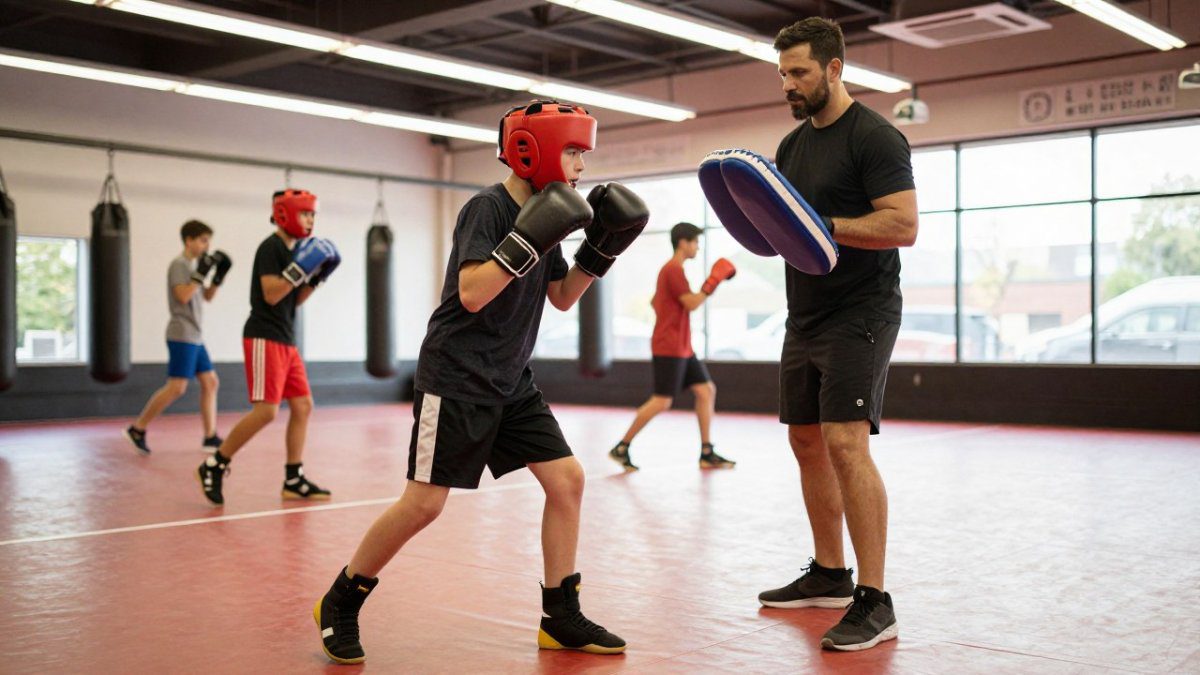
Here’s what boxing training is designed to build in young people:
- Routines. Training follows a consistent structure.
- Respect for rules. Gym rules and coaches’ instructions are followed.
- Goal setting. Small technical goals, like a cleaner jab, build step by step.
At TEAM DNA Boxing Club, our programs run from ages 5 to 70, and we are affiliated with USA Boxing and hold AIBA one-star certification. For a full list of what the sport offers kids and teens, see our breakdown of the benefits of after-school boxing.
Request More Info From TEAM DNA Boxing Club
Building discipline at home and in the gym works best together.
We have over 25 years of experience, and our traveling team has national reach. See which youth boxing program fits your kid, or learn how to book a boxing trial session.
Get started with TEAM DNA Boxing Club and give your child a place to grow stronger, calmer, and more disciplined.
The hardest part of building discipline in youth is staying consistent when progress feels slow. That’s exactly where a structured program helps.
Frequently Asked Questions
What are some practical ways to build discipline in youth?
Start with clear rules and expectations, then follow through with consistent consequences every time. Praise effort and positive behavior rather than only pointing out mistakes. Build daily routines around homework, chores, and sleep so structure becomes automatic. Give youth age-appropriate responsibilities and let them make small decisions within limits. Extracurricular activities like sports, martial arts, or boxing add another layer of accountability because coaches reinforce the same habits parents teach at home.
Can boxing help teenagers develop discipline and self-control?
Yes. Boxing training requires showing up on schedule, following instructions, controlling emotions under pressure, and respecting opponents and coaches. Those repetitions build self-regulation the same way physical drills build technique. The American Academy of Pediatrics notes that aversive discipline like yelling and shaming does not work long term, so a structured program that rewards effort and consistency fits better. Programs affiliated with USA Boxing, like TEAM DNA Boxing Club, include mentorship alongside training.
How do you discipline a teen who does not care about consequences?
When consequences stop landing, the issue is usually the relationship, not the punishment. Set aside one-on-one time so the teen feels heard before rules are enforced. Involve them in setting the consequences for broken agreements, which builds ownership. Focus on natural and logical outcomes, like losing phone privileges tied to missed responsibilities, rather than escalating punishments. If behavior stays stuck, talk to a school counselor or pediatrician about underlying barriers such as anxiety, ADHD, or trauma.
How can coaches teach discipline without using punishment?
Coaches can build discipline through routine, clear standards, and immediate feedback. Start every practice the same way so structure becomes expected. Praise effort and improvement out loud, and correct mistakes calmly and privately rather than calling players out publicly. Tie privileges like extra sparring time to consistent attendance and attitude. When a rule is broken, use a cool-down period and a short conversation about what went wrong, then return the athlete to training. That approach teaches self-control instead of fear.
