
How to Choose Between Rise Boxing and Counter Punching
Last Updated: October 28, 2026
Quick Summary
Choose rise boxing if you like moving forward, closing distance and forcing exchanges on your terms. Choose counter punching if you read opponents well and prefer to punish their actions with timing. Beginners should learn both, then lean into the style that matches their instincts.
- Rise boxing is a forward-pressure mindset, not a formal, rulebook-defined style.
- Counter punching only requires your opponent to do something, not throw a punch.
- Start counter training with one defensive move paired with one punch.
- Test your fit by tracking clean counters, times caught stepping in, and third-minute output over four weeks.
- TEAM DNA Boxing Club has over 25 years of experience and AIBA one-star certification.
Table of Contents
- Rise Boxing vs Counter Punch: What Each Style Actually Means
- Rise Boxing vs Counter Punching: Side-by-Side Comparison
- Boxing Counters for Beginners: Where to Start
- How to Counter a Jab in Boxing Without Getting Hit First
- Boxing Drills for Beginners to Compare Both Approaches
- Which Style Fits Your Experience Level and Body Type
- Start Training at TEAM DNA Boxing Club
- Frequently Asked Questions
Rise Boxing vs Counter Punch: What Each Style Actually Means
Rise boxing vs counter punch is a comparison between two ways of thinking about a fight: one built on moving forward and dictating the action, the other built on reading your opponent and answering their move. The style that fits you depends on your temperament, your experience, and how you react when someone pressures you.
Most beginners pick a style before they understand it. That’s the first mistake.
Rise boxing is an approach where the fighter steps in, closes distance, and keeps the pressure on. The idea is simple: make your opponent react to you instead of letting them set the pace.
Counter punching is a defensive approach where the fighter waits, reads an incoming punch, avoids it, and fires back into the opening it creates. The counter puncher scores off the opponent’s mistake.
Here’s the part most guides get wrong: these are not opposites. A good rise boxer knows how to counter. A good counter puncher knows when to press.
Defining Rise Boxing and Its Place in Modern Training
Rise boxing is not a formal, rulebook-defined style. It describes a forward-pressure mindset: you advance, you cut the ring off, and you force exchanges on your terms. Coaches often call this a pressure style or an aggressive style.
The tools are straightforward:
- A tight guard while closing distance
- Short, direct punches thrown on the way in
- Footwork that cuts off escape routes
- A high work rate to wear an opponent down
The trade-off is real. Pressure fighters spend more time in range, which means more risk. Accuracy and positioning matter more than raw power here.
Counter Punching: Defense That Turns Into Offense
Counter punching is a boxing style built on reaction and anticipation. The fighter uses defensive technique, like a slip, parry, catch, or block, then answers with a follow-up punch into the opening.
One point worth correcting: counter punching is not purely defensive. As MyBoxingCoach’s breakdown of counter punching explains, a counter does not require an incoming punch at all. It only requires that your opponent does something. That could be a step, a feint, or a dropped guard.
That single idea changes how you train it. You are not waiting for a punch. You are waiting for a mistake.
Rise Boxing vs Counter Punching: Side-by-Side Comparison
The clearest way to choose is to see how each style behaves under the same conditions. Rise boxing rewards forward movement and volume. Counter punching rewards patience and timing. To visualize the difference, explore the Boxing Video Gallery Highlights of real training and sparring.
Here is the framework that matters: compare the two styles on goals, tactics, strengths, weaknesses, and the situations where each one works.
| Factor | Rise Boxing | Counter Punching |
|---|---|---|
| Primary goal | Dictate pace and force exchanges | Punish the opponent’s actions and control space |
| Default movement | Steps in, closes range, cuts the ring | Circles, maintains distance, angles out |
| Main weapon | Pressure and combination volume | Timing and the follow-up punch |
| Best defensive tool | Tight guard, head movement, shoulder roll | Slip, parry, catch, dodge |
| Risk profile | Higher, more time in range | Lower early, higher if you wait too long |
| Cardio demand | High, sustained work rate | Burst-based, needs sharp reactions |
| Scoring pattern | Accumulates points through activity | Accumulates points through clean, visible counters |
| Best for | Fighters who like contact and can sustain pace | Fighters who read opponents and react quickly |
One more distinction worth knowing: counter punching and counter-attacking are not the same thing. A counter punch answers a single action. Counter-attacking is a longer sequence where you take over the exchange after the first answer.
The comparison is not “aggressive versus defensive.” It is “who sets the terms of the exchange.” Rise boxing sets them by moving first. Counter punching sets them by answering first.
Boxing Counters for Beginners: Where to Start
The best place to start is with defense, not offense. Boxing counters for beginners work only when the defensive move is already automatic. If you have to think about your slip, you will never land the counter.
Start with these four defensive responses:
- Slip: move your head off the center line
- Parry: deflect the punch with a small hand movement
- Catch: absorb the punch on your glove
- Block: cover up when you cannot avoid it
Then pair each one with a single counter. Slip and return a jab. Parry and fire a cross. Keep it to one defensive move and one punch until it feels boring.
If you have never laced up gloves, our guide on boxing for beginners with no experience covers the fundamentals before you add counters.
How to Counter a Jab in Boxing Without Getting Hit First
Learning how to counter a jab in boxing starts with one rule: deal with the punch before you throw. The jab is fast, so your counter has to be shorter than the jab itself.
Three counters that work for beginners:
- Slip outside and counter. Move your head to the outside of the jab and answer with a straight punch.
- Parry and return. A small tap on the incoming jab opens the center line for your cross.
- Catch and fire. Catch the jab on your rear glove and answer immediately with your lead hand.
Timing beats speed here. React too early and you get caught. React too late and the opening closes. Watch out: the most common mistake is throwing the counter before the jab has finished, which leaves you open to the second punch.
A 2023 study on lead straight-punch biomechanics found measurable differences in how boxing groups executed the lead straight punch compared to other combat athletes.
Boxing Drills for Beginners to Compare Both Approaches
The fastest way to know which style suits you is to drill both in the same session. These boxing drills for beginners are simple and need very little equipment.
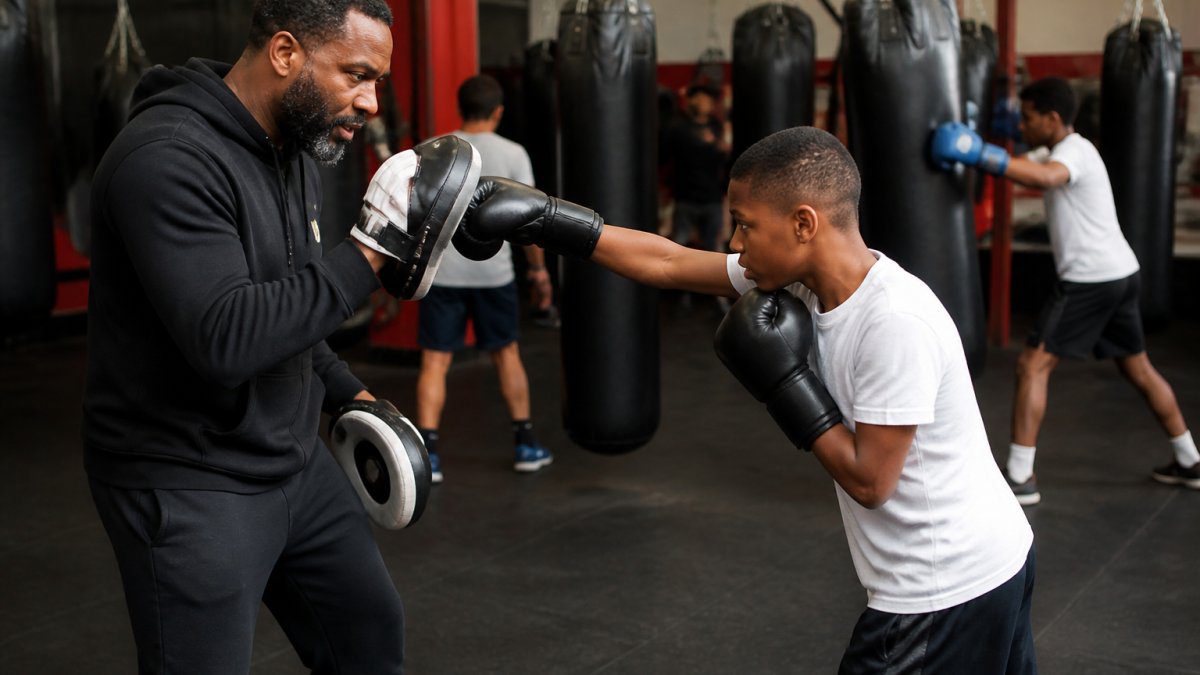
- Pressure round: three minutes of walking forward behind a tight guard, throwing short combinations
- Counter round: three minutes of slipping and answering a partner’s jab with one punch
- Footwork ladder: cut the ring off against a moving partner, then reverse roles
- Timing drill: partner throws a slow jab, you slip and counter on rhythm
Two rounds of each will tell you more than a month of reading. To train timing and counter reactions at home, you can get a Cobra Reflex Boxing Punching Bag. Most people feel which one fits within the first session.
Which Style Fits Your Experience Level and Body Type
Beginners should learn both, then lean into the one that matches their instincts. That is the honest answer, and most guides avoid it because it does not sound decisive. The better answer is a decision guide built on measurable traits: experience, reach, speed, work rate, and temperament.
First, a definition problem worth clearing up. “Rise boxing” is not a formal, rulebook-defined style. In practice, coaches use it to describe a forward-pressure mindset: you advance, cut the ring off, and force exchanges on your terms. Some gyms and programs use the phrase as a brand name, so ask your coach what they mean before you build a training plan around it.
Here is a simple decision guide:
- New to boxing, unsure: start with counter punching basics. Defense keeps you safe while you learn. A common pattern is that beginners who learn to slip and parry first take fewer clean shots in early sparring.
- Comfortable in close range: rise boxing will feel natural. If you already move forward under pressure, you will spend less energy learning the style.
- Long reach: counter punching lets you use distance and timing. Reach is an advantage only if you can keep the opponent at the end of it.
- Shorter reach: rise boxing lets you close the gap and work inside. Cutting the ring off matters more than raw speed here.
- High work rate, good cardio: pressure style suits you. Sustained volume is the engine of rise boxing.
- Patient, observant, good reactions: counter punching suits you. Reaction time and pattern recognition are trainable, but they are the core skill.
A practical way to test the fit is to track three things over four weeks of training: how many clean counters you land per round, how many times you get caught stepping in, and how your output holds up in the third minute of a round. Most practitioners find that one style produces better numbers for them within a month. That is more useful than a personality quiz.
Do not pick a style based on highlight reels. A pressure fighter who cannot sustain pace gets picked apart. A counter puncher who cannot read a feint gets walked down. The style only works when the underlying trait is trained.
Neither style is better. The fighter who understands both is harder to beat. A pressure fighter who can counter is a problem. A counter puncher who can press is a nightmare.
Start Training at TEAM DNA Boxing Club
Choosing a style on paper only goes so far. You need a coach who can watch you move and tell you the truth about which approach fits.
At TEAM DNA Boxing Club, we have over 25 years of experience. Our programs serve people of all ages. TEAM DNA Boxing Club has AIBA one-star certification and is affiliated with USA Boxing. That matters if you or your child wants to compete, because our traveling team has a national reach.
Our programs foster discipline, self-control, confidence, and resilience. You can also purchase tickets to the upcoming Team DNA Boxing Show while they are still available.
Frequently Asked Questions
What is the difference between rise boxing and counterpunching?
Rise boxing builds attacks from forward pressure, footwork, and combination punching, so you dictate the pace and force your opponent to react. Counterpunching waits for the opponent to commit, then answers with a slip, parry, or catch followed by a sharp return punch. Rise boxing rewards initiative and conditioning; counterpunching rewards timing, anticipation, and ring awareness. Most complete boxers learn both, but beginners usually pick one as a base and add the other later.
Is rise boxing a recognized boxing style?
Rise boxing is not one of the classic style labels you will find in old boxing manuals, which usually list boxer, puncher, counterpuncher, and pressure fighter. In practice, it describes an approach where a fighter rises into the exchange: stepping in, closing distance, and building offense off forward movement. Coaches often use the term to separate proactive, advancing fighters from reactive counterpunchers. Treat it as a training framework rather than an official sanctioning-body category.
How do you counter a jab in boxing?
The safest jab counters start with defense. Slip outside the jab and return with your own jab or a short cross. Parry the jab with your rear hand and fire a straight right down the middle. Catch it on your glove and answer with a hook. For beginners, the slip-and-jab counter is the easiest to drill because it keeps you off the center line. Practice the defensive move first, then add the return punch once the slip feels automatic.
Should a beginner learn offense or defense first in boxing?
Learn the guard and basic defense first, then add offense. A beginner who cannot slip, parry, or block will get hit while trying to punch, which builds bad habits and erodes confidence. Spend the first weeks on stance, head movement, and defensive responses, then layer in jabs and counters.
The hardest part is not choosing between rise boxing and counter punching. It is walking into a gym for the first time. We coach beginners, returning boxers, and competitive athletes with the same standard, and we build the fundamentals before the flash. Get started with TEAM DNA Boxing Club and find the style that fits how you actually fight.
